


4 Days in Valle d’Itria: The Heart of Puglia, Italy
- Maureen

- Apr 18
- 4 min read
Updated: Apr 19

Italy has something for everyone—historic cities, breathtaking scenery, Blue Flag beaches, archaeological wonders, and world-class food and wine. Puglia, also known as Apulia, delivers on all of it. Within the region, the Valle d’Itria is known for its whitewashed villages, fruit orchards, hidden coves, and ancient olive groves. With so many picturesque towns to explore, we devoted three full days to truly soak it all in.
Overview
Day 1: Arrive via Rome→ base in Conversano
Day 2: Polignano a Mare & Monopoli
Day 3: Alberobello & Martina Franca
Day 4: Ostuni & beach hopping
Day 1: Arriving in Puglia
While Bari is Puglia’s main airport (with a smaller hub in Brindisi), many international travellers, like us, arrive via Rome. Trains and buses connect most cities, making it a great option for those without a car. We chose the flexibility of a rental car to reach the valley’s hidden corners and we’re glad we did.
We immediately headed east toward our base just outside of Conversano, stopping only briefly at a roadside Autogrill for amazing coffee and pastries, our first reminder that we’re truly in Italy! Conversano is an authentic hilltop town just 15 minutes from the coast offering a great home base to visit Polignano a Mare, Monopoli, Alberobello and the surrounding hilltop towns.
We settled into our beautiful masseria, unwinding from a long travel day. We soaked up the peaceful surroundings set amongst the olive groves, lounging by the lovely pool followed by a tasty evening dinner set in their enchantingly lit outdoor dinning area.
Day 2: Polignano a Mare, Monopoli & Conversano dinner

On our first full day in Puglia, we were excited to get out and experience the famous Polignano a Mare, perched dramatically on the Adriatic cliffs. We headed straight to the famous Lama Monachile, a pebbled beach framed by a striking Roman bridge. Wasting no time we jumped into its beautiful turquoise water and floated amongst its limestone cliffs. As we looked up towards the striking white buildings, we understood why it is one of Italy’s most photographed spots.
We spent the better part of the day exploring the town. It is full of charm, with quaint stores and great food from gelato, to the famous cave restaurant Grotta Palazzese to traditional Pugliese sandwiches from a Pucceria. It’s also the birthplace of Domenico Modugno, singer of the iconic song “Volare” we made sure to get a snap of his statue on the coast before heading out to our next stop.
Just 10 km south lies the port town of Monopoli, where we discovered it's laid-back authentic feel. Bright blue fishing boats bob in the harbour, and the Baroque cathedral anchors the old town. It’s the perfect place for a stroll and to get a sense of the day-to-day life of the Pugliese.
That evening we headed to Conversano for an amazing Pizza dinner. Wandering its pedestrian streets and discovering its medieval castle and stunning Romanesque cathedral we appreciated its charms among every corner and its lively yet relaxed vibe.
Day 3: Alberobello & Martina Franca
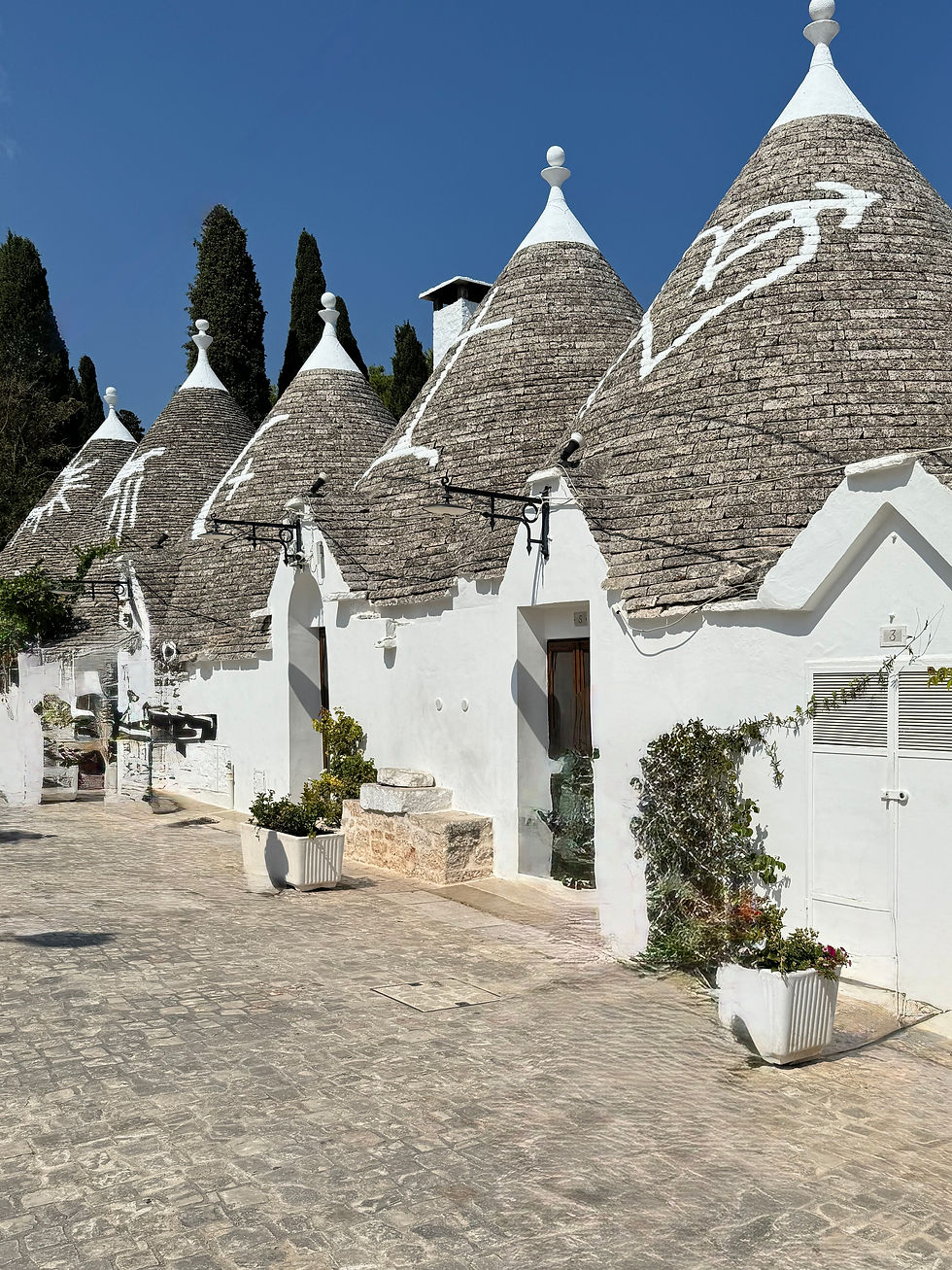
Next on our bucket list was a journey inland to visit the famous Puglia's hilltop towns. First up, Alberobello, a UNESCO World Heritage Site renowned for its trulli—iconic cone-roofed limestone homes. Wandering through its cobblestone streets, pausing in quaint shops, and admiring these distinctive dwellings felt truly magical, as though we had stepped into a fairy-tale village.

After short drive our next stop was Martina Franca, where we explored its Baroque architecture, we strolled its picture perfect streets passing through Porta di Santo Stefano to reach the Basilica di San Martino and then stopped for a lovely outdoor lunch in the shade where we had the local "Polpette" (meatballs) in a tasty red pepper sauce.
After a full day of visiting, we made our way back to our home base, passing beautiful Locorotondo in the distance —a circular white village that overlooks the valley.
Day 4: Ostuni & Beach Hopping

For our final day, we headed to Ostuni, “La Città Bianca” to see its gleaming white buildings rise above olive groves. We spent the morning wandering up the maze of narrow alleys and hidden courtyards and to appreciate the cathedral at the summit.
In the afternoon, we made our way back to the coast to cool off with an Adriatic swim at Torre Guaceto, a protected marine reserve with pristine sand and crystal-clear water and then back Polignano a Mare to jump into the waters at Cala Paura, a rocky cove, perfect for sunbathing and jumping off its limestone ledges. That evening we opted for dinner in Polignano enjoying traditional Orichiette at Bella 'Mbriana.
Final Thoughts
From wandering Alberobello’s fairytale streets and watching the sunset over the Adriatic , Valle d’Itria has a way of slowing time down. The coffee tastes amazing, the pace softens, and every turn reveals another gem, if you haven't been yet - you must go!
Tips:
Staying at a Masseria offers a truly authentic experience—peaceful, rustic, and immersed in nature.
The best time to visit is spring or fall to avoid peak summer crowds and the Mediterranean heat.
Staying a little longer? Check out 5 Days: Salento & Cilento Coast, Italy and


Comments